
How to Study for the JLPT N5: A Beginner's Roadmap
Kana, core vocabulary, and grammar — a simple, repeatable routine to pass the JLPT N5, plus how to drill it with flashcards and quizzes that adapt to you.
The JLPT N5 is the first rung on the Japanese proficiency ladder. It's very achievable in a few months of consistent study — the key word being consistent. Ten focused minutes a day beats a three-hour cram session once a week, because language sticks through repeated exposure, not intensity.
Here's a roadmap that gets you there.
Step 1: Master the kana first
Before anything else, learn to read hiragana and katakana. Everything downstream — vocabulary, grammar, reading — depends on it, and trying to learn vocab from romaji is a trap that slows you down later.
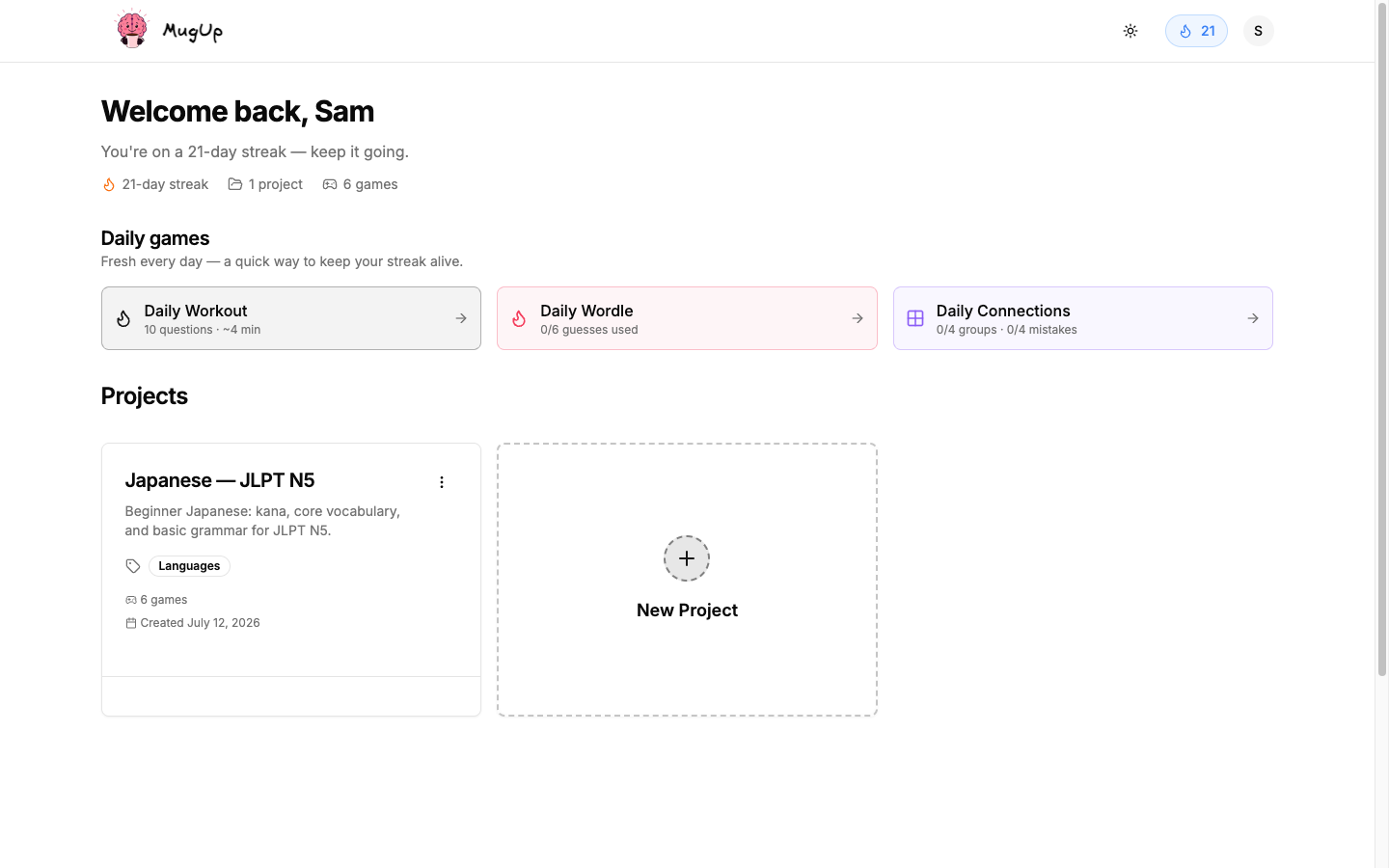
The fastest way is recognition drills: see あ, recall "a," instantly. Matching games (kana → romaji) and flashcards are ideal because they train pure recognition speed. Give yourself a week or two of daily reps and it becomes automatic.
Step 2: Build core vocabulary
The N5 covers roughly 800 words. You don't need all of them memorized perfectly, but the high-frequency ones — greetings, numbers, days, common verbs and adjectives — should be second nature.
Use spaced repetition here: review each word right before you'd forget it, and words you already know fade into longer intervals while the tricky ones come back often. This is far more efficient than flipping through a wordlist front to back.
Step 3: Learn the essential particles
Grammar at N5 is mostly about particles — the little words that glue sentences together:
- は (wa) marks the topic.
- が (ga) marks the subject.
- を (o) marks the direct object.
- に and へ mark destination and location.
- の shows possession.
Fill-in-the-blank drills are perfect for particles because they test the exact decision you'll make in real sentences: which particle goes here?
Step 4: Mix it up and test yourself
Reading a textbook is passive. To actually retain, you need active recall — pulling the answer from memory. Rotate through formats so you're testing recognition (flashcards), discrimination (multiple choice), and production (fill-in-the-blank). Variety keeps it engaging and covers more of what the real exam asks.
Make daily practice effortless
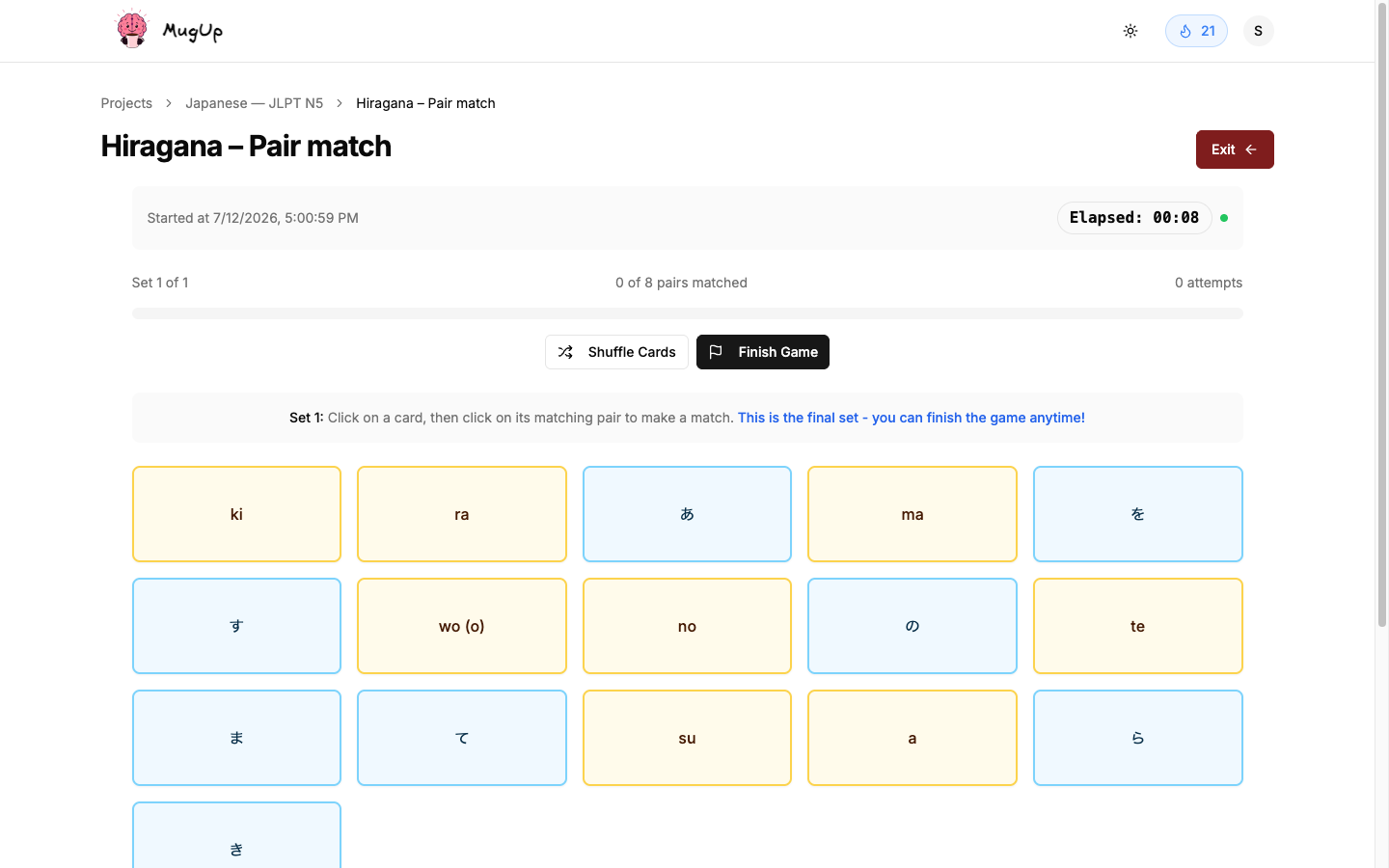
The hardest part of a daily habit is friction. MugUp removes it: type "JLPT N5 core vocabulary" or "Japanese particles," and it builds flashcards, quizzes, and matching games for you instantly. You keep a streak going with a few minutes a day, and the material comes to you already in game form.
Start free and build your first Japanese deck today.
The takeaway
Kana first, then vocabulary and particles, always through active recall and a little every day. Consistency is the whole game — and the easier you make it to show up, the more likely you are to pass.
Learning another language? See how to learn French for Canadian PR.
Turn this into a game
Type a topic and MugUp's AI builds quizzes, flashcards, and matching games in seconds. Free to start.