How to Study for USMLE Step 1 Without Burning Out
An evidence-based USMLE Step 1 study plan built on active recall and spaced repetition — plus how to turn any high-yield topic into practice questions in seconds.
Step 1 is less about how many hours you log and more about how you spend them. The students who do well aren't the ones who reread First Aid five times — they're the ones who test themselves relentlessly. Here's how to build a study routine around that principle.
Why active recall beats rereading
Every time you force your brain to retrieve a fact — instead of just re-reading it — you strengthen the memory. This is called the testing effect, and it's one of the most replicated findings in learning science. Highlighting and rereading feel productive because the material starts to look familiar, but familiarity isn't the same as recall. On exam day, you don't get to reread the chapter; you have to pull the answer out cold.
The fix is simple: turn everything you study into a question.
A high-yield weekly loop
- Learn the concept from your primary resource (a video, First Aid, a lecture).
- Immediately convert it into questions — not tomorrow, today, while it's fresh.
- Quiz yourself on those questions the next day, then again a few days later.
- Space out the topics you already know and concentrate on the ones you keep missing.
That last step is spaced repetition: reviewing material at increasing intervals so you catch it right before you'd forget it. It's how tools like Anki work, and it's why cramming the night before rarely holds for a multi-week board exam.
What to turn into questions
Some of the highest-yield formats for Step 1:
- Mechanisms of action for drugs (autonomic pharmacology is a classic).
- Enzyme and pathway steps in biochemistry — glycolysis, the urea cycle, the electron transport chain.
- Distinguishing features of similar organisms or diseases (gram-positive cocci, the anemias).
- First-line treatments and their key side effects.
Flashcards work well for one-to-one facts. Multiple-choice questions are better for testing whether you can discriminate between similar answers — which is exactly what Step 1 asks you to do. Matching games are great for lists like "organism → key lab finding."
Turn your notes into a game in seconds
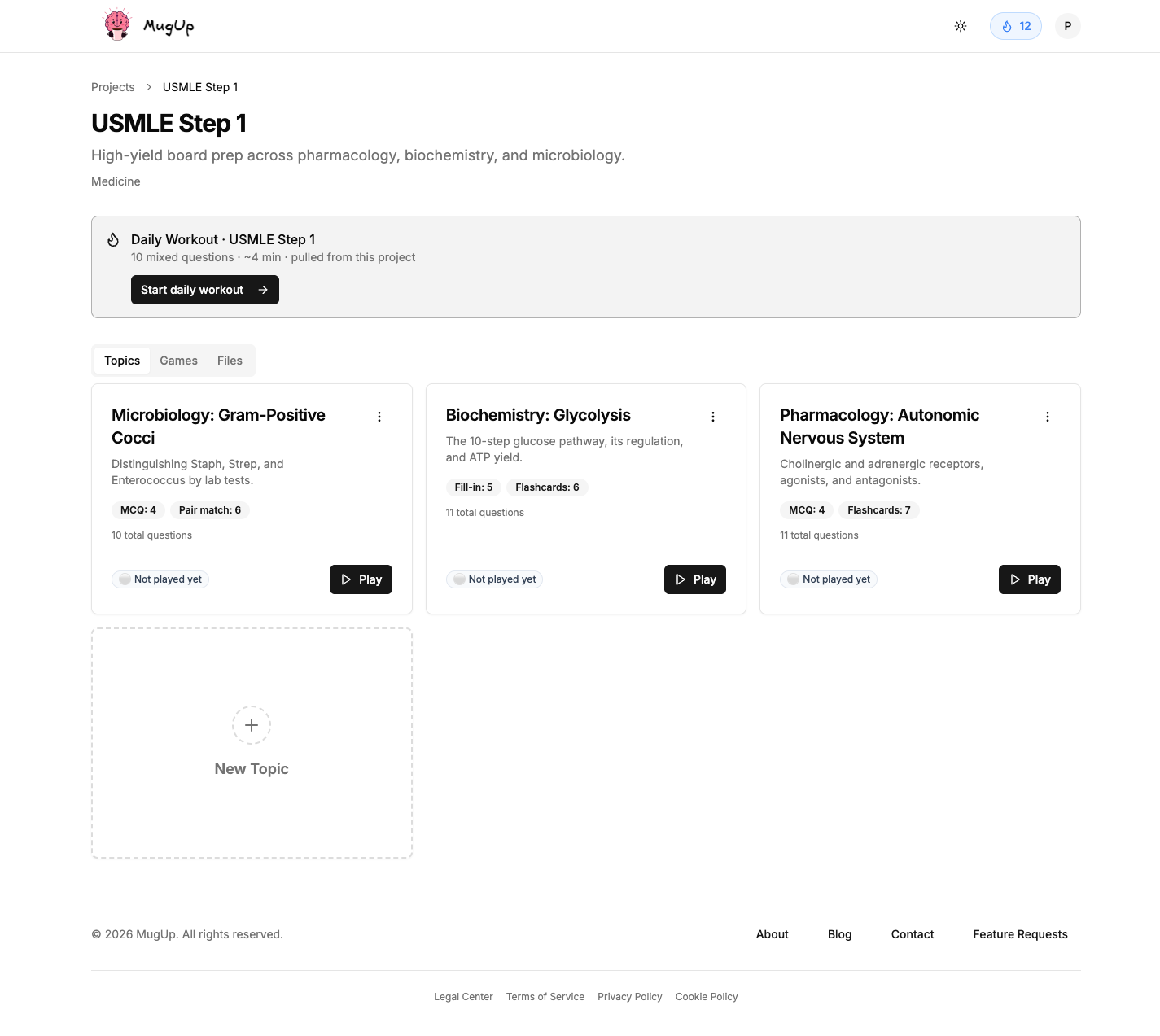
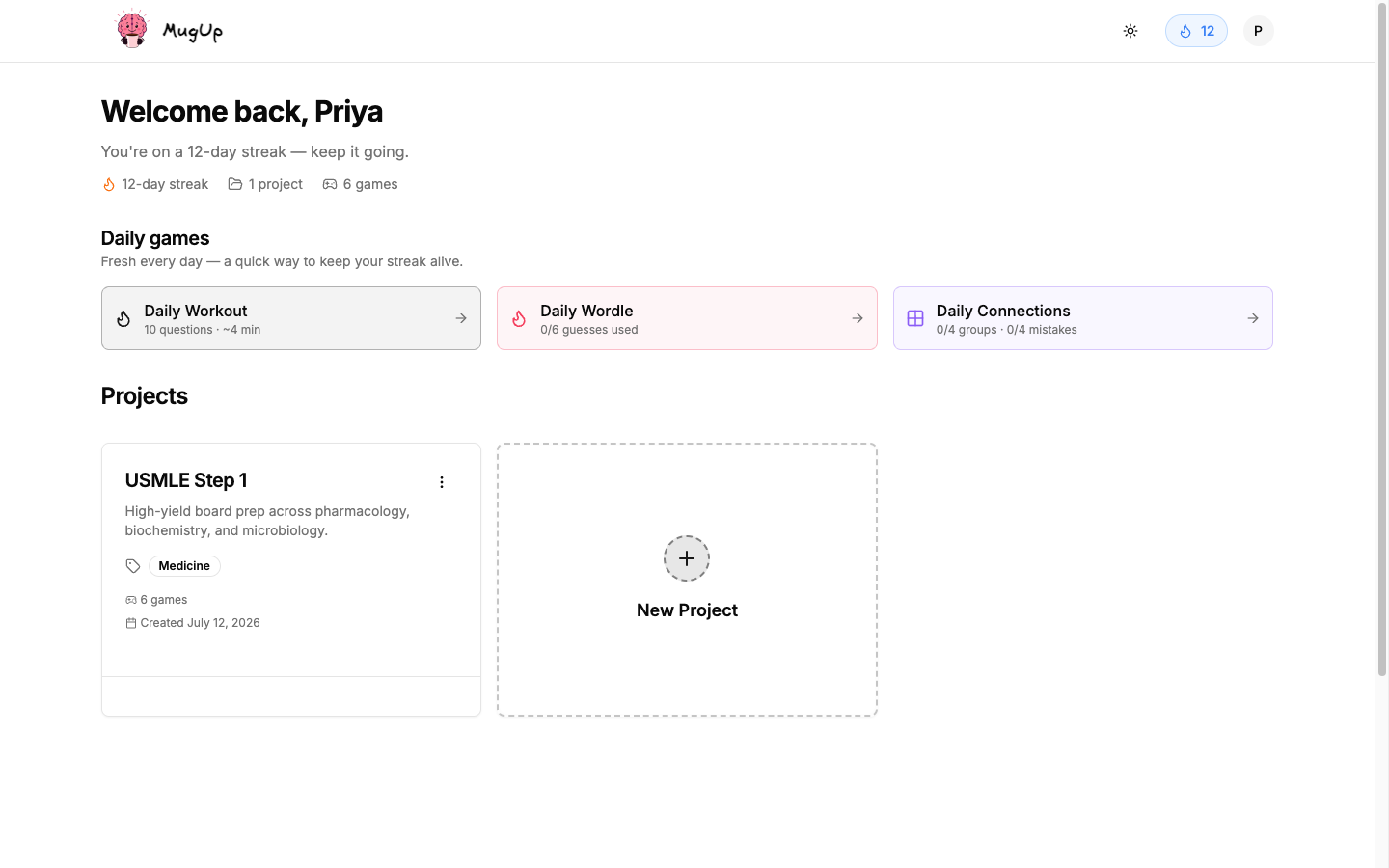
The tedious part of active recall is making the questions. That's the job MugUp does for you. Paste in a topic — "autonomic pharmacology" or "gram-positive cocci lab identification" — and it generates multiple-choice questions, flashcards, fill-in-the-blanks, and matching games automatically. You spend your time answering, not formatting cards.
You can start free and build your first deck today, or see what the Pro plan unlocks if you're studying full-time.
The takeaway
You already know the material exists in your books. The question is whether you can retrieve it under pressure. Build your routine around testing yourself early and often, space out your reviews, and let a tool handle the busywork of making questions. Your future self, sitting in the exam center, will thank you.
Prepping for a different exam? See our guides on studying for CFA Level I and study tips that actually work.
Turn this into a game
Type a topic and MugUp's AI builds quizzes, flashcards, and matching games in seconds. Free to start.